
Passenger services • Main line services • Germany • Deutsche Bahn • DB Fernverkehr
➤ Similar companies: Amtrak – BDŽ – ČD – CFL – CFR Călători – CP – Comboios de Portugal – DB Regio – DSB – Hellenic Train – HŽPP – Iarnród Éireann – MÁV – NS – ÖBB Personenverkehr – PKP Intercity – Renfe Viajeros – SBB/CFF/FFS – SJ – SNCB – SNCF Voyageurs – SŽ-Potniški promet – Trenitalia – VR Kaukoliikenne – Vy – ZSSK
Note: For educational purpose only. This page is meant purely as a documentation tool and has no legal effect. It is not a substitute for the official page of the operating company, manufacturer or official institutions. It cannot be used for staff training, which is the responsibility of approved institutions and companies.
Key points
- The restructuring of Deutsche Bahn following reunification ;
- The establishment of a unified and clearly defined corporate identity ;
- The continuation of the high-speed rail programme ;
- A current environment shaped by competition from other operators
General overview
The emergence of the DB Fernverkehr business unit in January 1999 was the result of a process whereby the various divisions of Deutsche Bahn were established as wholly owned subsidiaries of what became the Deutsche Bahn AG holding company. The initial aim was to create a clearly structured group that could eventually be floated on the stock market. It was already apparent that regional and long-distance services were two different businesses: the former would, in practice, have to be subsidised, whereas the latter could operate on ticket revenue alone. According to some commentators, this relatively new approach in the railway sector may have influenced the architecture of European directives.
DB Fernverkehr was therefore a business unit that took over the rather heterogeneous long-distance network of the 1990s, comprising a mixture of regular Intercity services, former express trains inherited from the East German Reichsbahn, night trains and a highly diverse range of international services.
| COMPANY TYPE | |
|---|---|
| Name: | DB Fernverkehr AG |
| Subsdiary/Branding from: | Deutsche Bahn AG |
| Country of registration: | Germany |
| Year founded (under this name): | 1 January 1999 |
| Sector: | Passengers longue distance |
| Investor(s) / Owner: | 100% Deutsche Bahn AG |
| Headquartered at: | Frankfurt am Main |
| Management of infrastructure: | no |
| Management of stations: | no |
| ACTIVITIES | |
| Regional & local traffic: | no |
| Long distance traffic: | yes |
| Freight traffic: | no |
| Traction: | in house |
| Urban transport: | no |
| Leasing: | no |
| Infrastructure works: | no |
| Rolling stock maintenance: | in house |
DB Fernverkehr is therefore now a subsidiary of the DB Group (Deutsche Bahn AG) and is positioned within the corporate structure as follows:

Germany is one of those large countries where people often need to travel long distances of between 200 and 800 kilometres for a variety of reasons. This led Deutsche Bundesbahn (DB), founded in 1949, to create a network of fast trains linking the country’s major cities. In 1994, DB merged with the former Deutsche Reichsbahn of East Germany to form a single railway group known as Deutsche Bahn AG (DBAG). Unlike France (SNCF Voyageurs) or Italy (Trenitalia), Germany very early adopted a structure based on separate entities for subsidised regional passenger transport and long-distance passenger services. The group’s current organisation includes several subsidiaries, one of which is dedicated solely to long-distance operations: DB Fernverkehr. DB Regio is responsible exclusively for subsidised regional services.
On this page
- The development of long-distance services ;
- DB Fernverkehr today ;
- The rise of high-speed rail ;
- The decline of night trains ;
- The arrival of competition
The development of long-distance services
Long-distance passenger services existed well before the creation of DB in 1949. These services were gradually restored following repairs to wartime damage and through the modernisation of a network that had become primarily north-south rather than east-west due to Germany’s division until 1990.
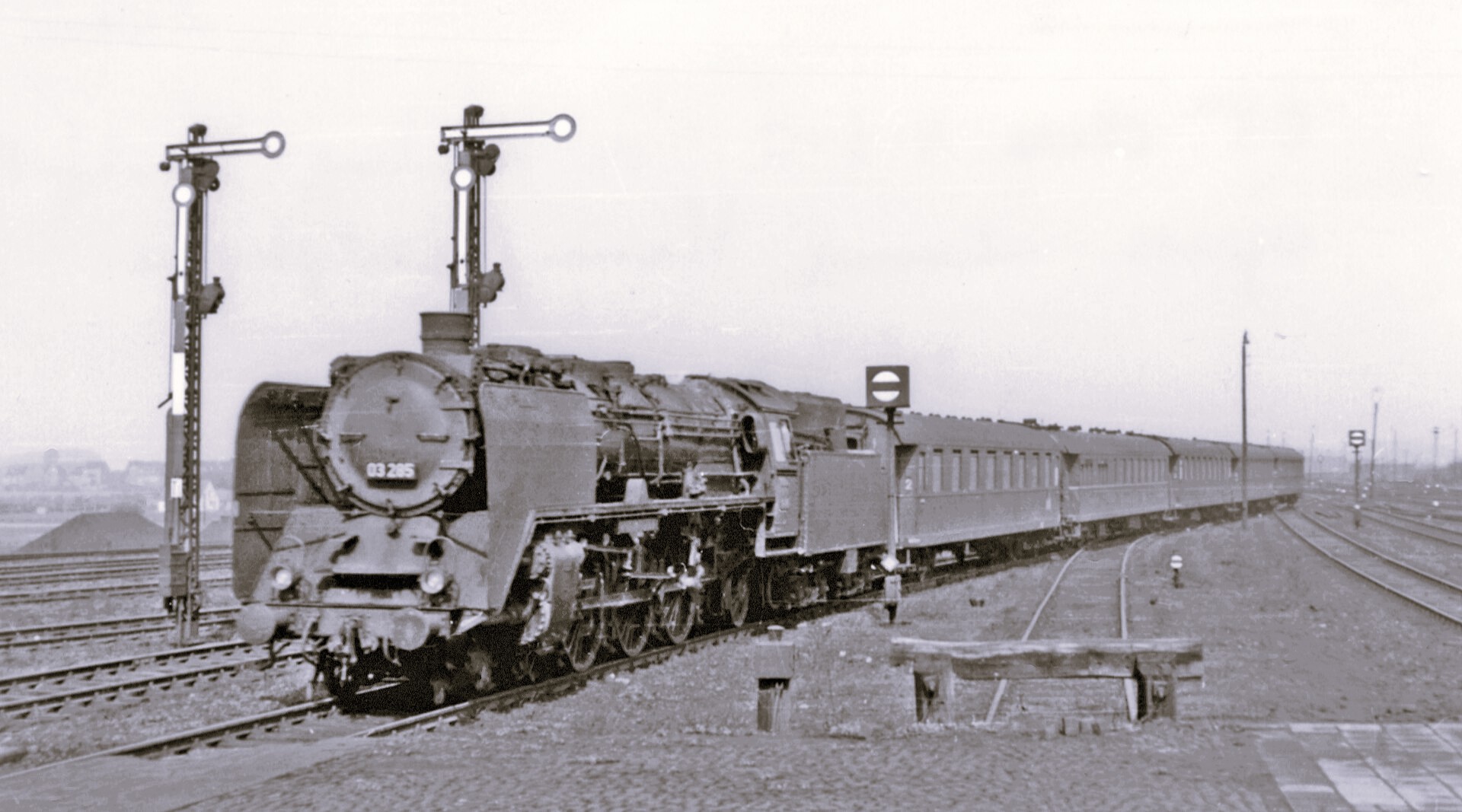
DB initially revived a wide range of express services before introducing a more structured hierarchy for long-distance trains. With the summer timetable of 20 May 1951, it reintroduced the Long-Distance Express (FD) category, which was replaced by the Long-Distance Train (F) category in 1955. Unlike the international “heavy” long-distance express trains, domestic services were also classified as “light” long-distance express trains. Until 1956, these F trains offered only second-class accommodation, while first class was available solely on international trains open to domestic passengers, such as the FD 10/9 Rheingold-Express, Rheinpfeil and Rheingold. The photograph opposite shows an FD Hamburg-Frankfurt train at Hamm station in 1953: steam-hauled, running on a network that was still largely unelectrified, and formed of pre-war coaches (photo: Brooksbank via Wikimedia).
From 1957 onwards, DB participated in the Trans Europ Express (TEE) network and transferred some F services into a first-class-only category, although these were not formally designated as TEE trains. A special supplement applied to these services. Other express trains were reclassified as D trains.
At the same time, DB managed all international services, which were coordinated around two annual timetables: summer and winter. These services were planned each year during meetings attended by all European public railway administrations, which gathered in a hotel for several days to establish the international timetable. The resulting network was highly diverse, ranging from prestigious TEE services to conventional daytime and overnight express trains. Each railway administration supplied rolling stock for a one-year period, guaranteed train paths and operating staff, and established fares and supplements, including those for TEE, sleeping-car and couchette services, all handled through a currency-clearing mechanism in the days before the euro existed.
With the end of the summer timetable on 25 September 1971, the F train category disappeared. It was replaced by a two-hourly InterCity network based on a British concept introduced in 1966. Although these trains remained first-class only, they were not all designated as TEE services, and it became increasingly clear that long-distance rail travel was no longer reserved for a wealthy elite. This evolution culminated in May 1979 with the introduction of the two-class, hourly InterCity network spanning Germany, featuring air-conditioned coaches and restaurant cars.
With the end of the summer timetable on 25 September 1971, the F train category disappeared. It was replaced by a two-hourly InterCity network based on a British concept introduced in 1966. Although these trains remained first-class only, they were not all designated as TEE services. It became increasingly clear that long-distance rail travel was no longer reserved for a wealthy elite.This evolution culminated in May 1979 with the introduction of the two-class, hourly InterCity network spanning Germany, featuring air-conditioned coaches and restaurant cars.


DB Fernverkehr today
The separation of long-distance services and the creation of a holding company stemmed directly from the 1994 Bahnreform, which was designed to pull the railway sector out of a deep crisis. Before the reform, both Deutsche Bundesbahn and Deutsche Reichsbahn were burdened with massive debts, steadily losing market share to road transport and costing taxpayers billions of Deutsche Marks each year. German reunification further exacerbated these challenges.
The chosen solution was to establish Deutsche Bahn AG, a company governed by private law but wholly owned by the federal state and managed according to commercial principles. The objective was to clearly distinguish between infrastructure, freight, regional passenger services and long-distance operations. DB Fernverkehr was therefore expected to account precisely for its costs, revenues and profitability, rather than having its performance obscured by other activities.
The DB holding structure nevertheless preserved the synergies between infrastructure and operations while complying with European requirements for accounting and organisational separation. In 1999, the various business divisions were converted into subsidiaries but remained under a single holding company in order to maintain coherent strategic management of the German railway system.
Today, DB Fernverkehr operates the following services:
On the national segment:
- Intercity
- Intercity-Express (ICE).
On the international segment:
- ICE International to Netherlands, Belgium, France, Switzerland, Austria
- Cooperation with Railjet Xpress (ÖBB, from Austria – RJX – providing train crews, drivers)
- Cooperation with Railjet (ÖBB, from Austria – RJ – providing train crews, drivers)
- Cooperation with Nightjet (NJ) (providing train crews, drivers and, in some cases, locomotives on the German network)
- Cooperation with TGV (french high-speed train – providing train crews, drivers)
- Cooperation with EuroCity (EC – from Switzerland, Poland, Czech Republic, Denmark – providing train crews, drivers)
Under Germany’s Basic Law, the federal government is responsible for long-distance rail transport. However, it leaves the planning and operation of these services to the market; there is no contractual relationship between the German’s State, Länder and DB Fernverkehr AG, which determines its services independently and at its own discretion. Long-distance rail transport grew steadily during the first two decades following rail reform. From 2015 until the slowdown caused by the COVID-19 pandemic, passenger-kilometres increased from 36.9 billion to 44.7 billion. Market share also rose significantly, and DB AG now generates substantial profits from this segment of its business.
The rise of high-speed rail
Like France and Italy, Germany developed high-speed trains with the support of its domestic rail industry. This led to the creation of the ICE (InterCity Express), which entered service on 29 May 1991. The ICE, a symbol of Germany’s innovative railway sector, remains the flagship of the country’s rail network today. DB Fernverkehr is responsible for its operation, running services over both conventional lines and purpose-built high-speed routes. The principle of the regular-interval timetable has been retained, with half-hourly frequencies now offered on certain corridors.
➤ See our dedicated page about high speed rail in Germany.
The arrival of high-speed rolling stock gradually displaced locomotive-hauled trains operated by the Class 103, Class 120 and later Class 101 locomotives. In the early 2000s, however, locomotive-hauled formations still accounted for a significant share of DB Fernverkehr’s long-distance timetable. Unlike France or Spain, Germany has a more balanced urban geography, with economic and population centres distributed across the country rather than concentrated around the capital. This situation stems partly from Germany’s division for fifty years, during which a network traditionally centred on Berlin evolved into a north-south system stretching from Hamburg to Munich and Basel. In this context, high-speed requirements differ, and the network offering speeds above 250 km/h is more fragmented. Consequently, DB Fernverkehr continues to operate a large fleet of conventional-speed Intercity services.

Over time, the coaches used in these locomotive-hauled trains, generally from the UIC-Z generation, began to show their age and were either sold off or scrapped. ICE multiple units gradually took over an increasing number of routes, including some with little or no high-speed infrastructure, such as those linking Cologne with Hamburg or Hanover.


To compensate for the withdrawal of the older locomotive-hauled trains, DB Fernverkehr nevertheless opted for an intermediate concept: a locomotive-hauled train capable of 230 km/h, but without the demanding technical and regulatory requirements associated with true high-speed rail.
DB’s choice was also motivated by the need to serve lines where high speed is not available. ICE L trains can nevertheless run at 230 km/h on sections of the main network that allow this speed, which facilitates integration into the timetable with other IC trains, even if they do not run as fast. Finally, there is the financial aspect, as Talgo trains are less expensive than ICE trains, which must have technical characteristics according to high speed TSI. The first Talgo in service was the ICE 1548, between Berlin and Cologne in December, 14, 2025.
The main fleet managed today:

Siemens/AEG/Krupp
1991 – …

Siemens/ABB/AEG
1995 – …

ICE 3M BR406 (†)
Siemens/Bombardier
2000 – 2025

Siemens
2013 – …

9201 – 9237
9001 – ….
9451 – 9500
Siemens/Bombardier
2016 – …

Siemens
2022 – …

Talgo
2025 – …
The decline of night trains
Since the 1950s, DB had operated a number of overnight trains, both domestic and international. These services catered for long-distance travel at a time when high-speed rail did not yet exist. During the summer season, car-carrying overnight trains, known as Autoreisezüge, linked several German cities with destinations in southern Europe. A substantial fleet of rolling stock was built during the 1960s and 1970s.
In 1991, DB, ÖBB and SBB founded DACH Hotelzug AG to develop a new generation of overnight trains, featuring double-deck sleeping cars and improved comfort standards. Renamed City Night Line in 1995, the company enjoyed steady growth before being integrated into the DB Group.
However, the rules changed in the 2000s: international train services now had to be charged on a commercial basis. Previously absorbed within the overall deficits of state railway administrations, such losses could no longer be accommodated in the unsubsidised long-distance market. As a result, the Belgian railways withdrew all night-train services in 2003, while France gradually eliminated many of its overnight routes. Above all, the rise of low-cost airlines fundamentally reshaped the market.
Following a restructuring in 2010, all City Night Line services were managed by DB Fernverkehr, with the Austrian and Swiss railways retaining only a functional role. In 2013, DB Fernverkehr was also confronted with growing competition from newly liberalised long-distance coach operators in Germany. Seeing this as a threat, DB reviewed its finances. Representing barely 4% of traffic and generating annual sales of around €90 million, night trains were said to be losing around €30 million per year. Deutsche Bahn therefore chose to refocus on its ICE and Intercity networks at a time when it still faced little direct rail competition on its home market.
December 2016 marked the end of DB Fernverkehr’s overnight train operations, with ÖBB taking over a select number of services through its Nightjet brand.


The arrival of new operators
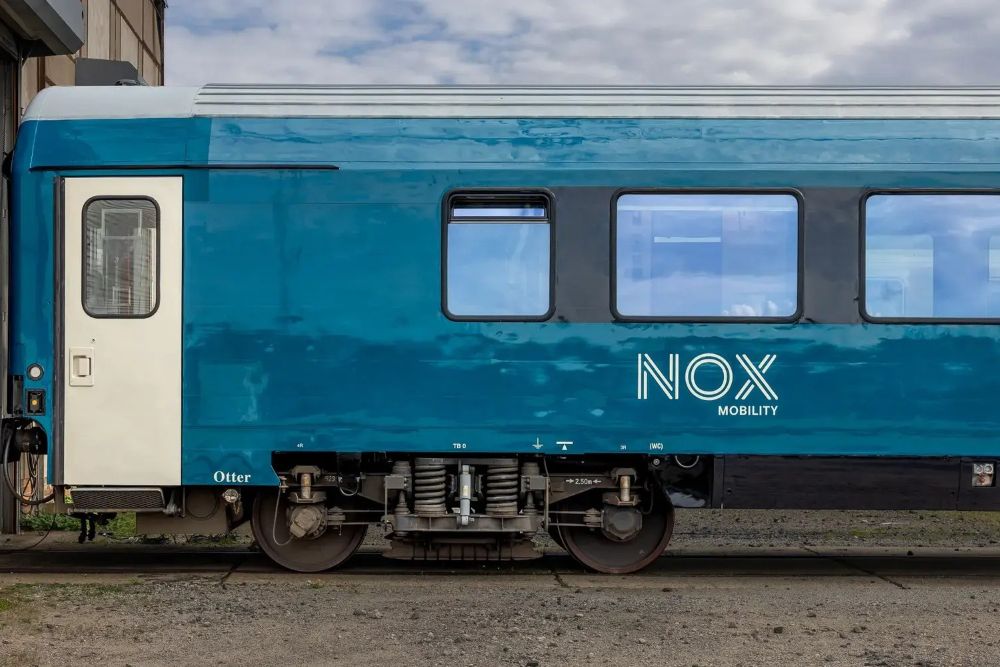
The story of night trains continued to be written in Germany, largely thanks to ÖBB and its Nightjet services, which operate nightly throughout the year. At the same time, the private Swedish operator Snälltåget maintained the Malmö-Berlin night train via a ferry link before rerouting the service through Denmark after the pandemic. In 2023, the Dutch cooperative European Sleeper launched a night train between Brussels and Berlin, later extended to Prague. A second service appeared at the end of 2025 between Paris, Brussels and Berlin. In September 2026, RDC Deutschland took over the operation of the Stockholm-Hamburg-Berlin night train from SJ, running the service in its own right. The route is also served several times a week by Snälltåget. It was also in 2026 that several new initiatives appeared to be gaining momentum, notably Luna Train and Nox, with services expected to be launched during 2027 or 2028.
What RDC, European Sleeper, Snälltåget and Nox have in common is that they do not operate daily services and rely largely on vintage rolling stock. These complementary initiatives cater to a niche market and do not undermine the business model of DB Fernverkehr, which now focuses primarily on daytime ICE services.
From 2016 onwards, the announcement of the withdrawal of Deutsche Bahn’s night trains prompted a strong reaction from civil society, passenger associations and environmental organisations. This mobilisation reflected a broader attachment to rail as a sustainable alternative to air travel on medium- and long-distance European routes. Since then, several NGOs have advocated the revival of overnight services, viewing them as a valuable instrument for reducing transport-related carbon emissions. However, their expansion continues to face significant structural challenges, including the high cost of rolling stock, limited availability of nighttime train paths, the complexity of coordinating services across multiple national railway systems, and often fragile commercial viability. While the European Union supports such initiatives through regulatory and financial measures, it cannot operate these services directly, as it is neither a sovereign state nor the owner of a railway undertaking.
The arrival of competition
Unlike Italy, Austria, the Czech Republic or Sweden, where long-distance rail competition became established at an early stage, Germany continued to rely heavily on DB Fernverkehr after 2010. With its vast ICE fleet and nationwide network, the incumbent remained overwhelmingly dominant. The list below may suggest a thriving competitive landscape, but most challengers have so far occupied niche markets and posed little real threat to DB. That could change between 2028 and 2030. FlixTrain has set out ambitious expansion plans, while the surprise arrival of Italy’s private operator NTV is expected to raise the stakes considerably. Rather than targeting niche segments, NTV aims to establish a large-scale presence in both Germany and the Benelux countries.


➤ See our dedicated page

📷 Wattman via Flickr – ➤ See our dedicated page

📷 RDC Pressroom – ➤ Our dedicated page coming soon

📷 GoVolta/Faustine Gauthier – ➤ See our dedicated page
📷 Nox – ➤ Our dedicated page coming soon

📷 NTV Deutschland – ➤ Our dedicated page coming soon
🟧
[TOP]
Passenger services • Main line services / Ticketing • Germany • Deutsche Bahn • Lexical
——————————————————————————————————————————————————————————————-